
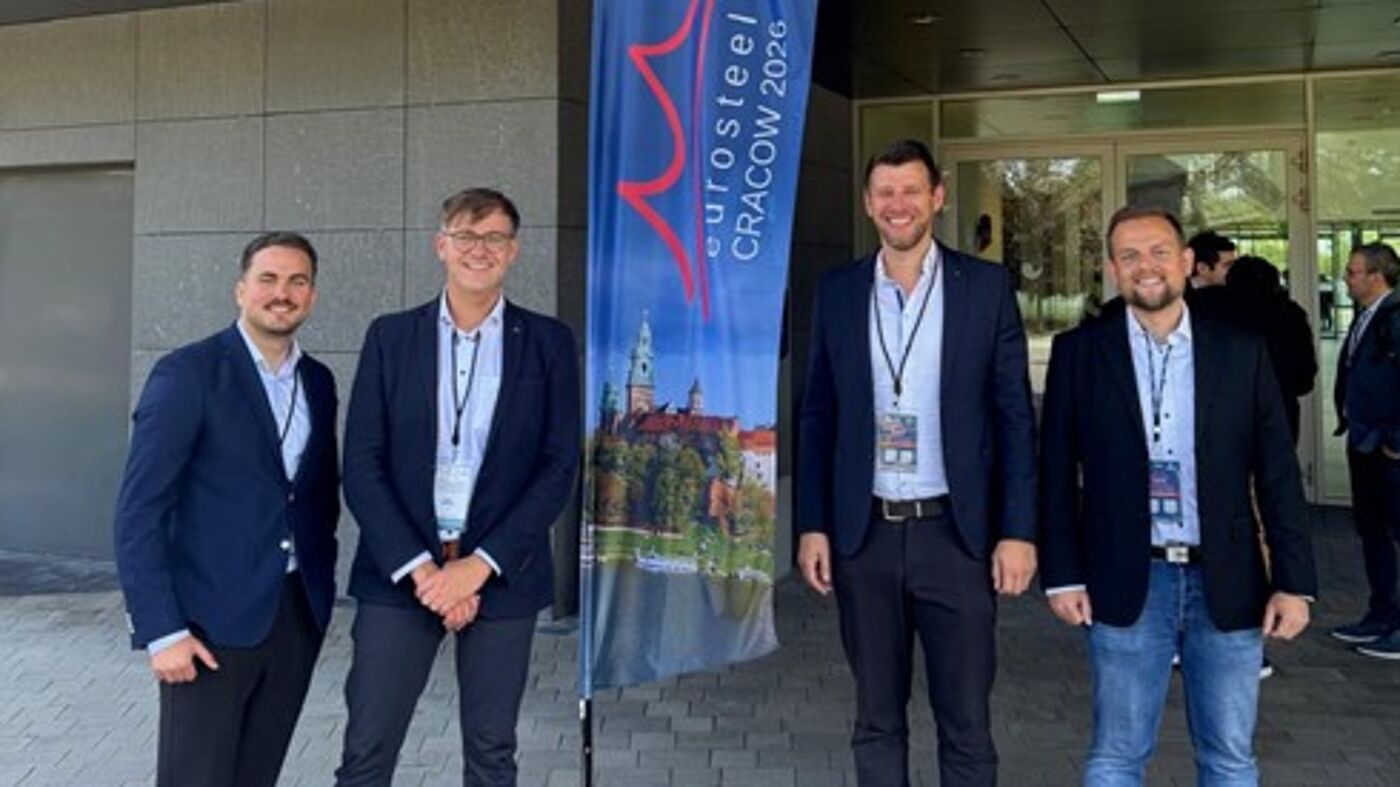
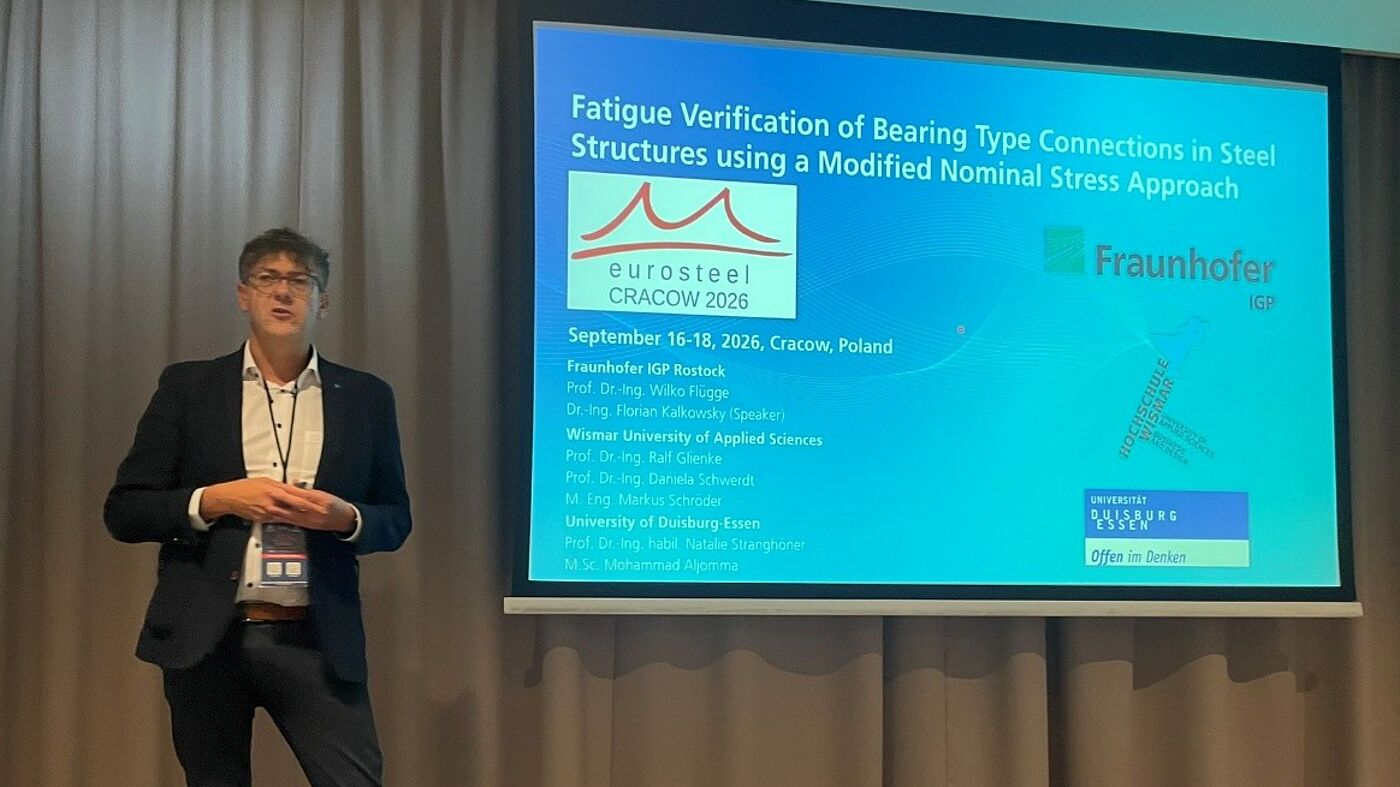
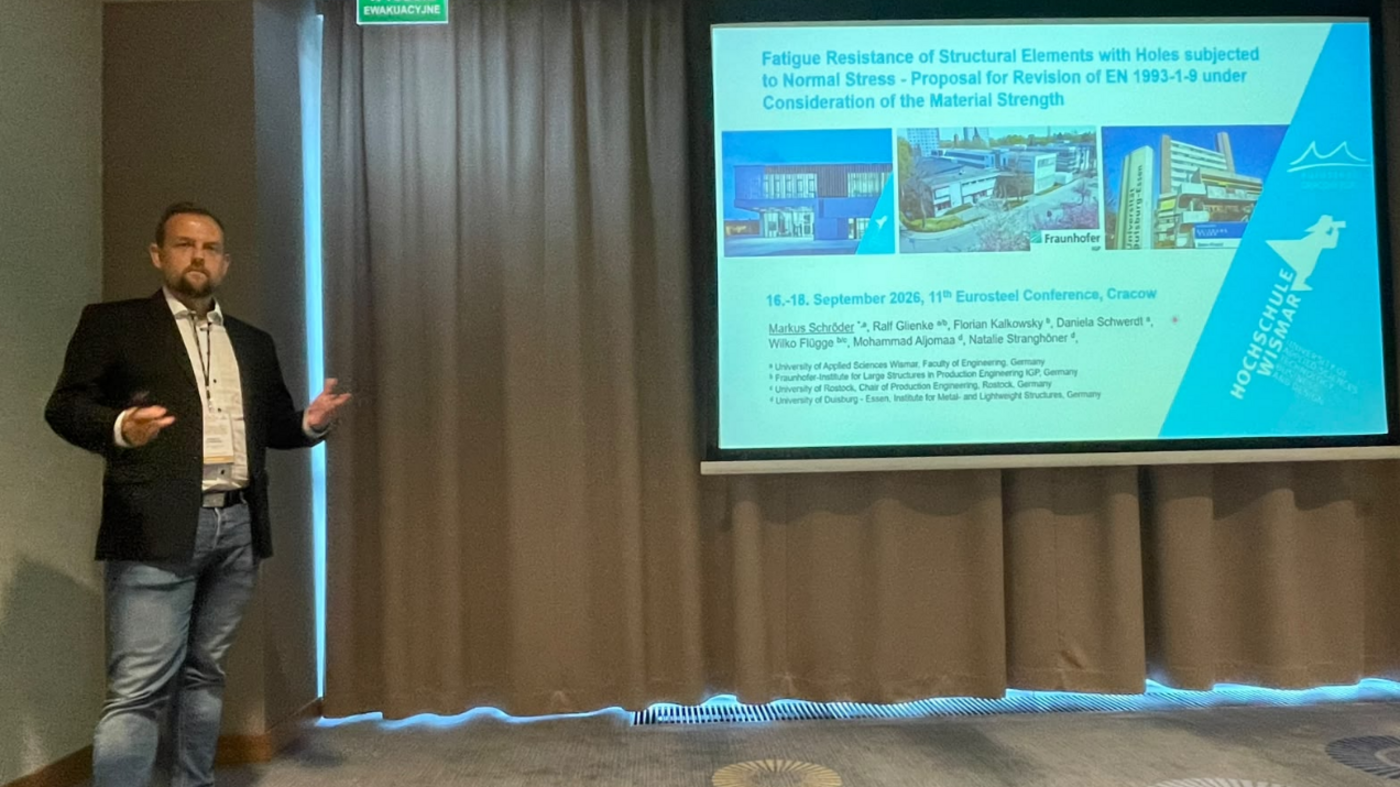
The two researchers from the Mechanics/Design research group took part in the international conference alongside partners from the collaborating Fraunhofer IGP research centre. In their presentations, the researchers from Wismar University of Applied Sciences presented innovative design proposals for the fatigue strength verification of bearing type connections and of structural elements with holes subjected to normal stress. For the first time, the approaches developed systematically incorporate material strength and component geometry into the design process, thereby utilising previously unconsidered potential in the fatigue strength verification of steel structures.
The long-term aim is to incorporate the research findings into future standards and regulations. The new design approaches enable a more cost-effective and material-efficient design of relevant components and structures. In addition to the economic benefits for companies, this also yields environmental benefits, as material usage is reduced and resources are conserved.
The following research findings were produced as part of the successfully completed FOSTA project Kerbfall synthetisch (P1665):
- Fatigue Verification of Bearing Type Connections in Steel Structures using a Modified Nominal Stress Approach
Florian Kalkowsky (Fraunhofer IGP), Ralf Glienke (Hochschule Wismar), Markus Schröder (Hochschule Wismar), Wilko Flügge (Fraunhofer IGP), Daniela Schwerdt (Hochschule Wismar), Mohammad Aljomaa (IML Duisburg-Essen), Natalie Stranghöner (IML Duisburg-Essen) - Fatigue Resistance of Structural Elements with Holes subjected to Normal Stress – Proposal for Revision of EN 1993-1-9 under Consideration of the Material Strength
Markus Schröder (Hochschule Wismar), Ralf Glienke (Hochschule Wismar), Florian Kalkowsky (Fraunhofer IGP), Daniela Schwerdt (Hochschule Wismar), Wilko Flügge (Fraunhofer IGP), Mohammad Aljomaa (IML Duisburg-Essen), Natalie Stranghöner (IML Duisburg-Essen)
Eurosteel is one of the most important European conferences in the field of steel construction and brings together researchers, engineers and experts from academia and industry to discuss the latest developments in steel and composite construction. This year’s conference focused on current research, innovative reuse concepts and new approaches to the design, analysis and construction of modern steel and composite structures.
The event provided participants with an important platform for professional exchange and for initiating new collaborations at both national and international levels.