
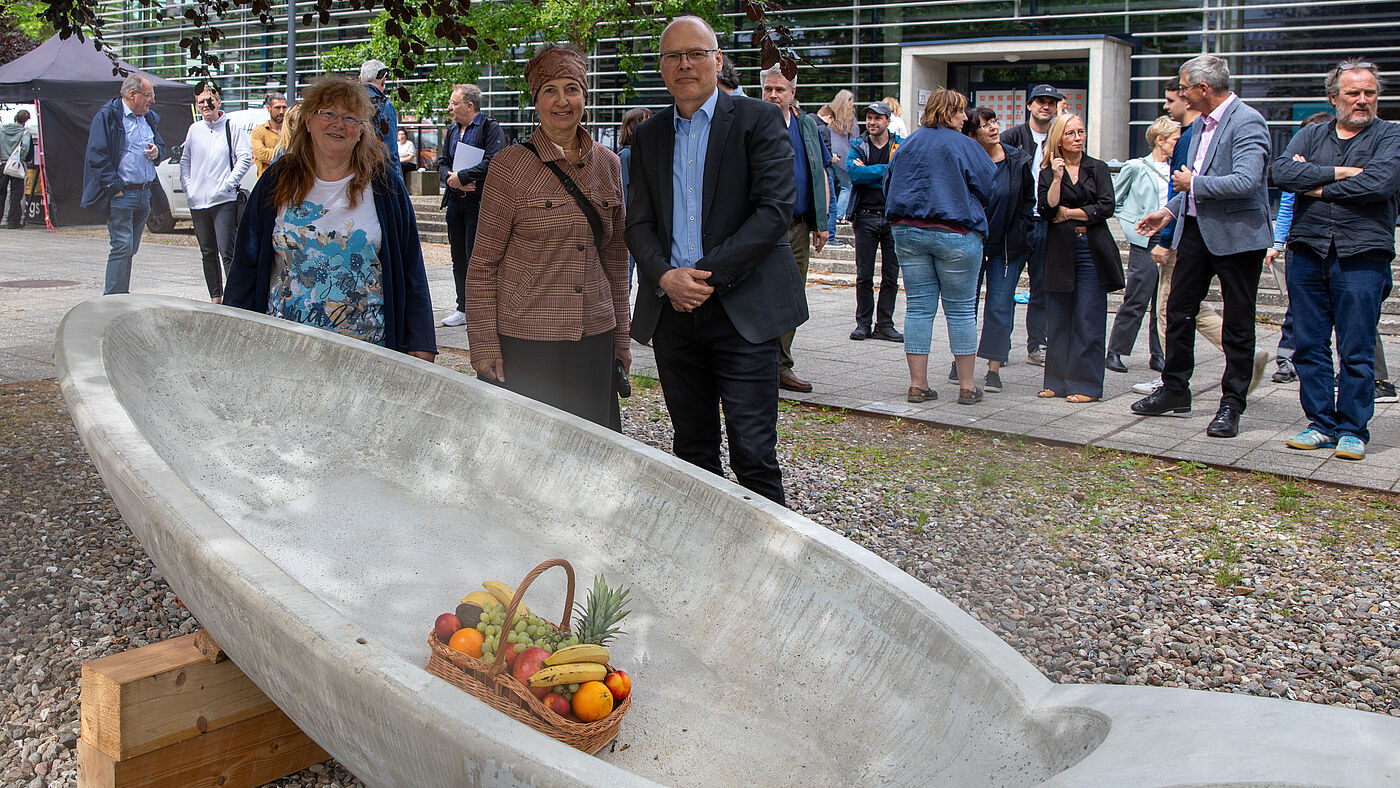

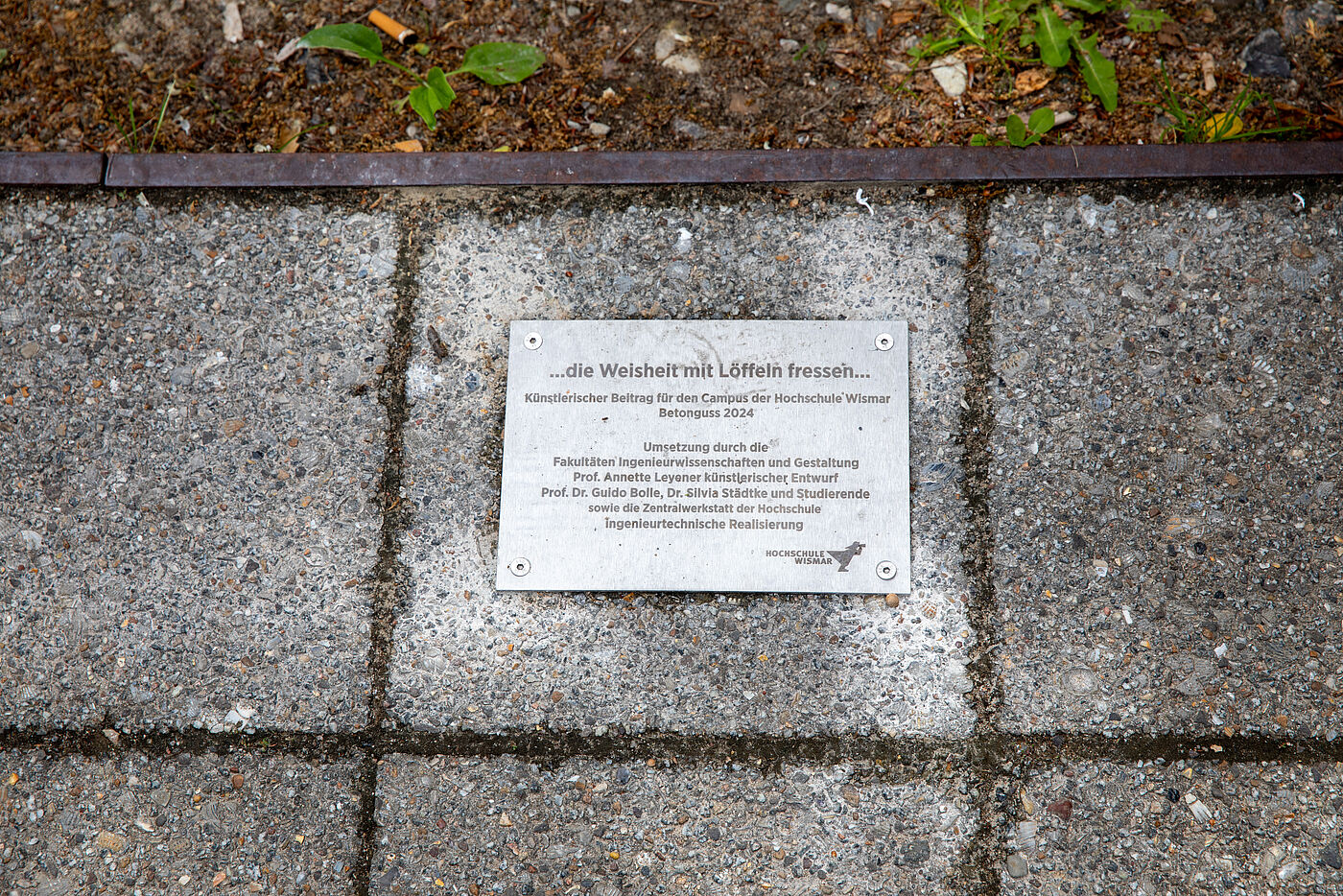
This new art installation was initiated by Professor Annette Leyener and realised as a project in collaboration with Professor Dr Guido Bolle, Dr Silvia Städtke, Dr Jörg-Hinrich Rabe, students of interior design and civil engineering, and staff from the UAS central workshop.
“I developed the artistic design; the concrete structure is now a gift to the UAS. It has always been important to me that studying is fun, that we get to the bottom of things using different methods. Learning, being amazed and fascinated – I have always found these things important. This artistic contribution to the campus is intended to encourage people to reflect on learning,” says Leyener of the project.
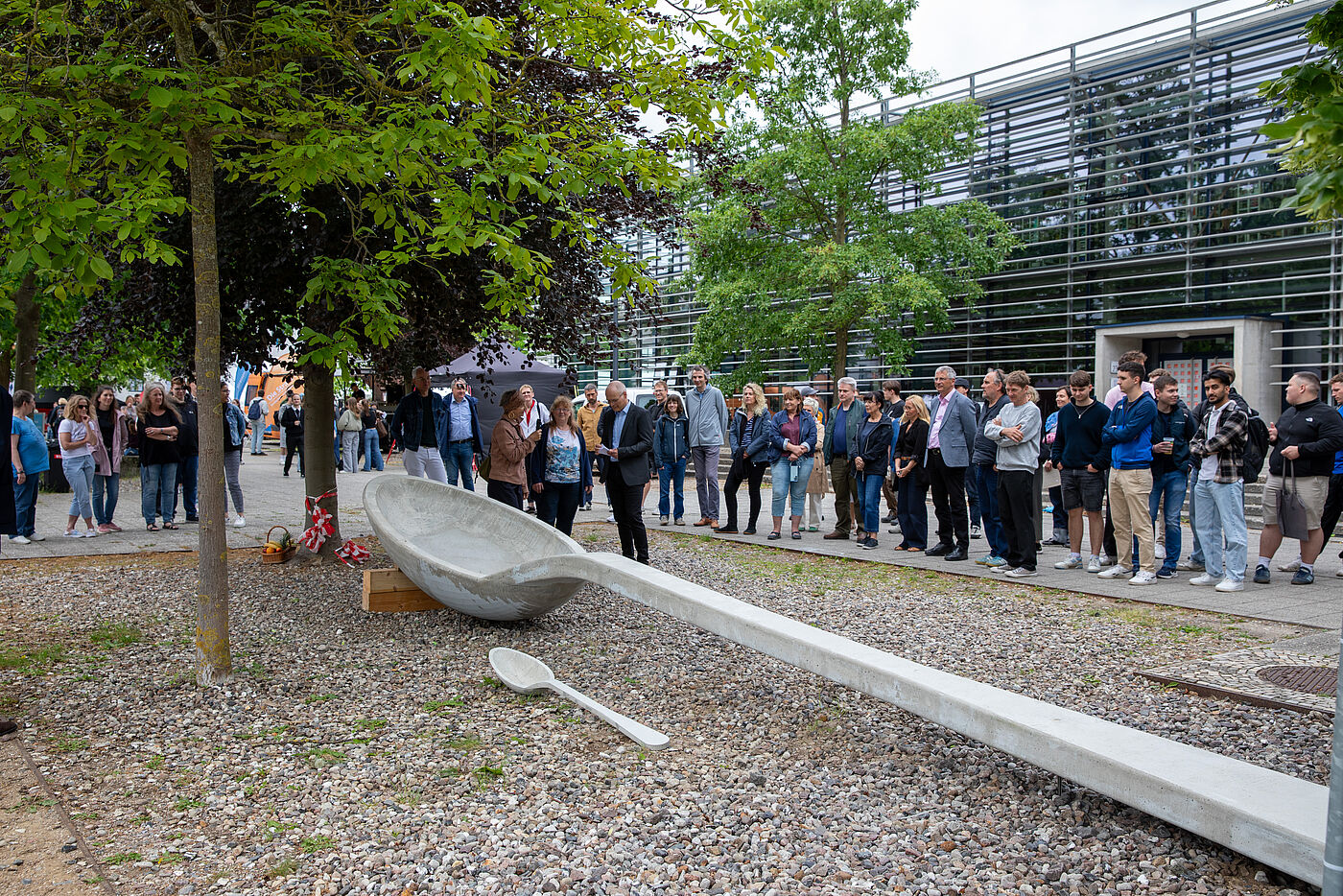
During his inauguration speech, Professor Bolle mentioned that Professor Leyener, who had taught at the Faculty of Design, had been seeking support for the project even before her retirement in 2023. He not only read from her letter, but also discussed its symbolism and drew parallels between the act of eating and the acquisition of knowledge, which he said he could never get enough of. He drew a further comparison with the collaborative role-play at the university, in which lecturers act as chefs. They provide intellectual nourishment in an appealing form, usually as easily digestible fare with only a few tough nuts for the students to crack. And he was keen to point out that one should avoid unhealthy things and make eating a pleasant experience by doing it together.
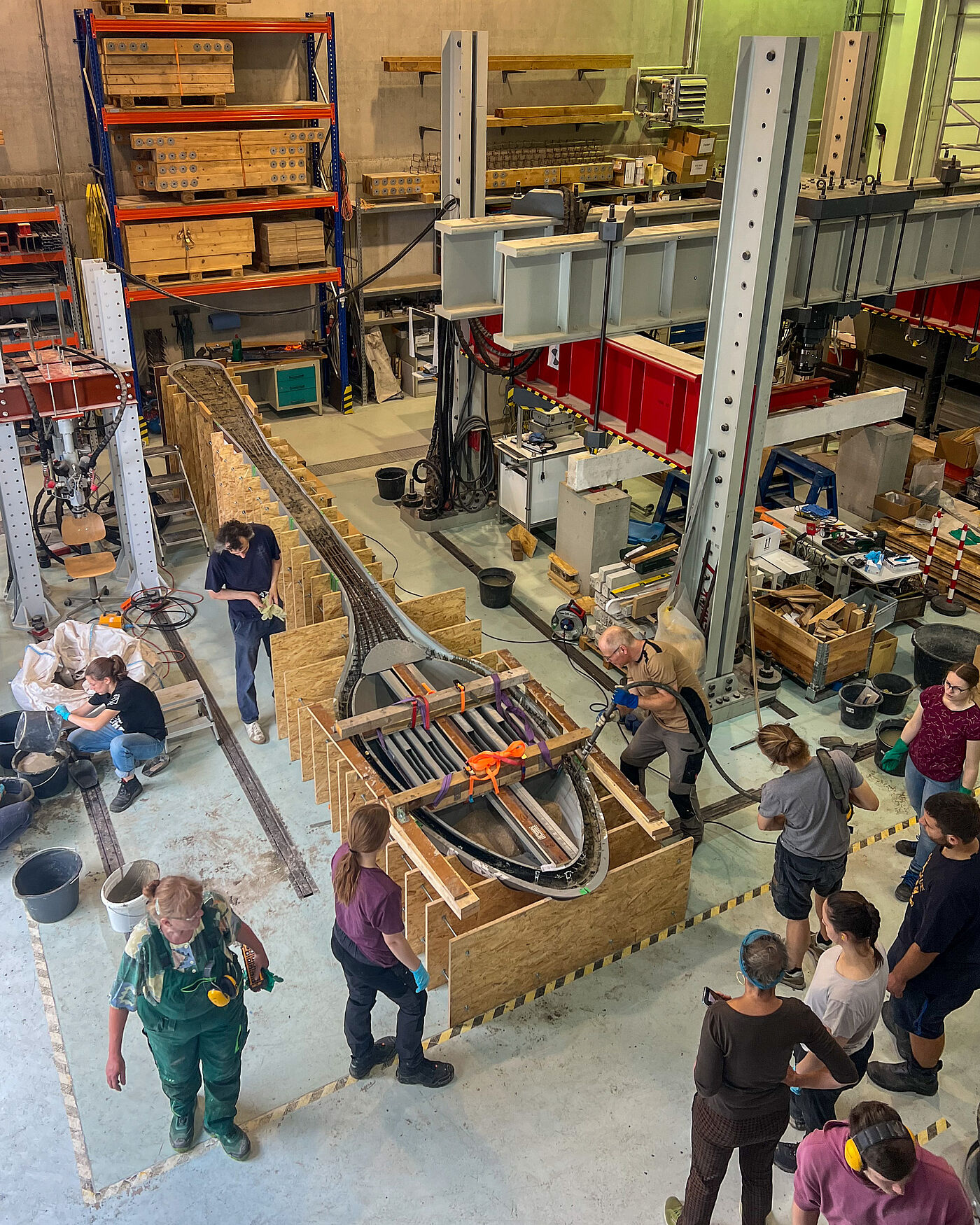
A brief look back: the original object was a spoon that Professor Leyener had created for an exhibition in Kaarz Castle Park. It served as the basis for her earlier idea of creating a concrete version. To this end, it was first scanned – in autumn 2022 – and the data was used to generate a 3D model, which enabled the creation of a negative mould. The Fused Deposition Modelling (FDM) printing process was used for this. Later, experiments were carried out at the Wismar campus in the Structural Testing Laboratory with various concrete mixes and their properties. In the summer of 2024, the implementation began and, for the first time, the dimensions of the artwork became tangible and visible.
Now, the 8.33-metre-long spoon invites reflection and perhaps raises questions such as ‘How is knowledge created? Or, in the best case, wisdom?’, ‘What does knowledge achieve?’ or ‘What does the false pretence of knowing achieve?’