
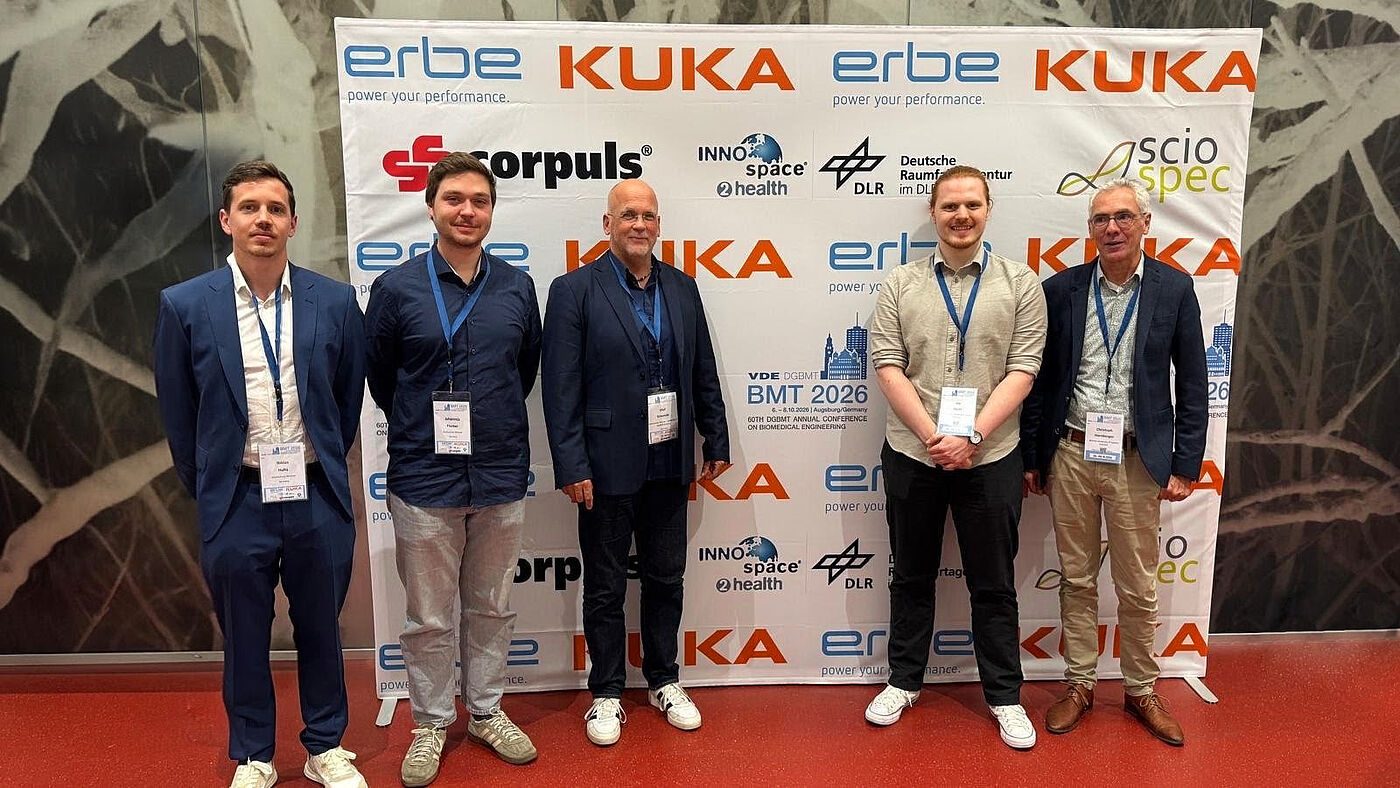
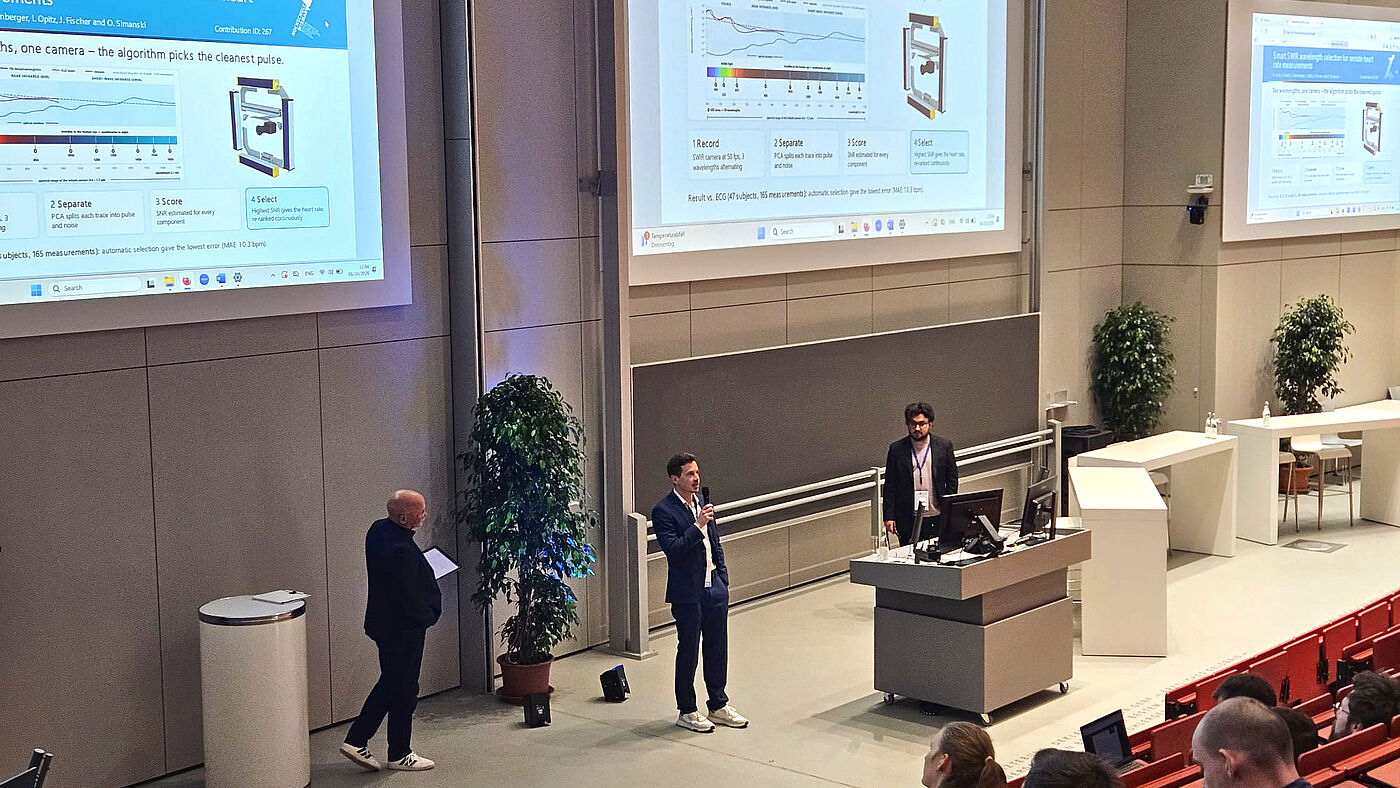
In a presentation, Niklas Huhs outlined the current technical possibilities in the field of Ambient Assisted Living. Mr Huhs’s PhD project, supervised by Prof. Olaf Simanski, is investigating ways of measuring vital signs contactlessly, thereby improving the quality of life of people in need of care. He is receiving a PhD scholarship from Wismar University of Applied Sciences for this work.
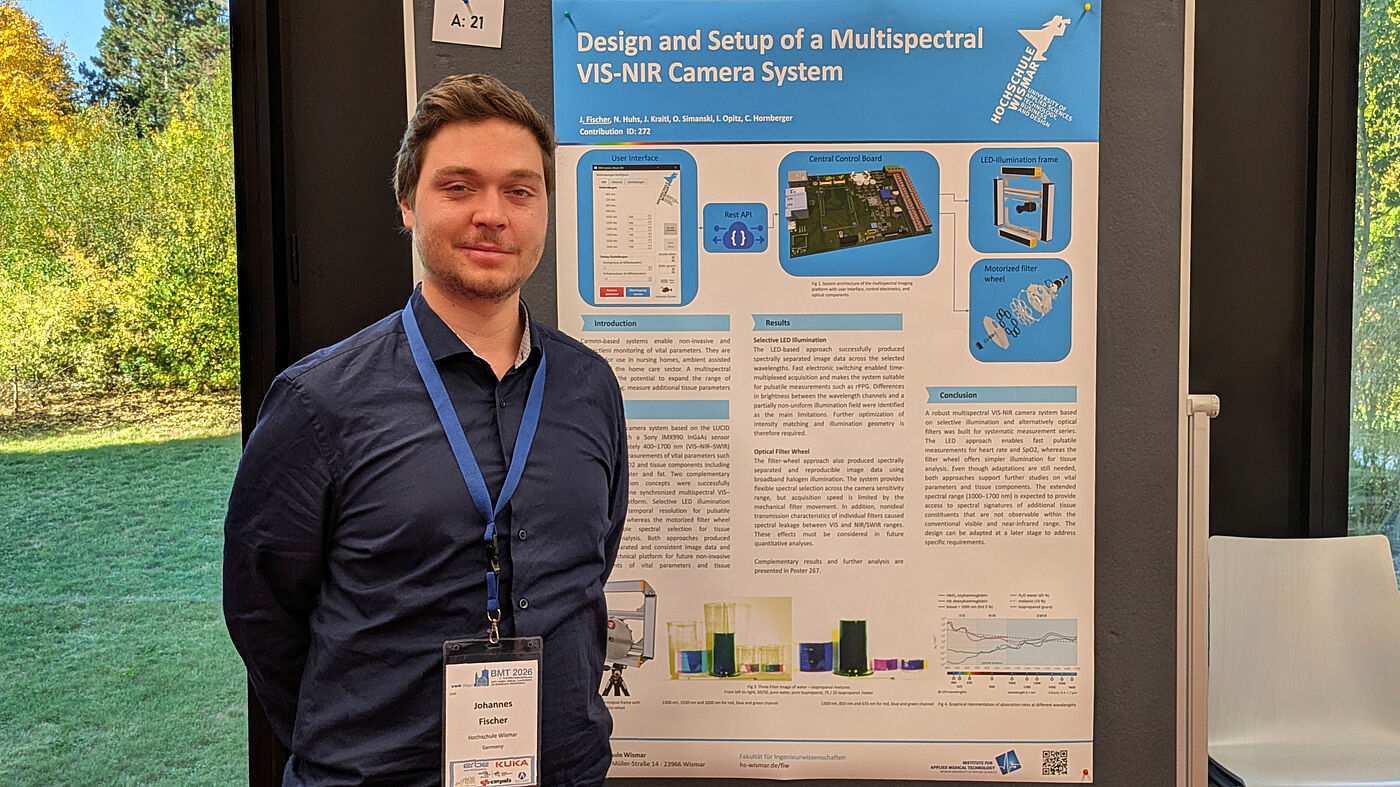
Johannes Fischer presented the results of his Bachelor’s thesis on a multispectral camera. His work supports Mr Huhs’s project.
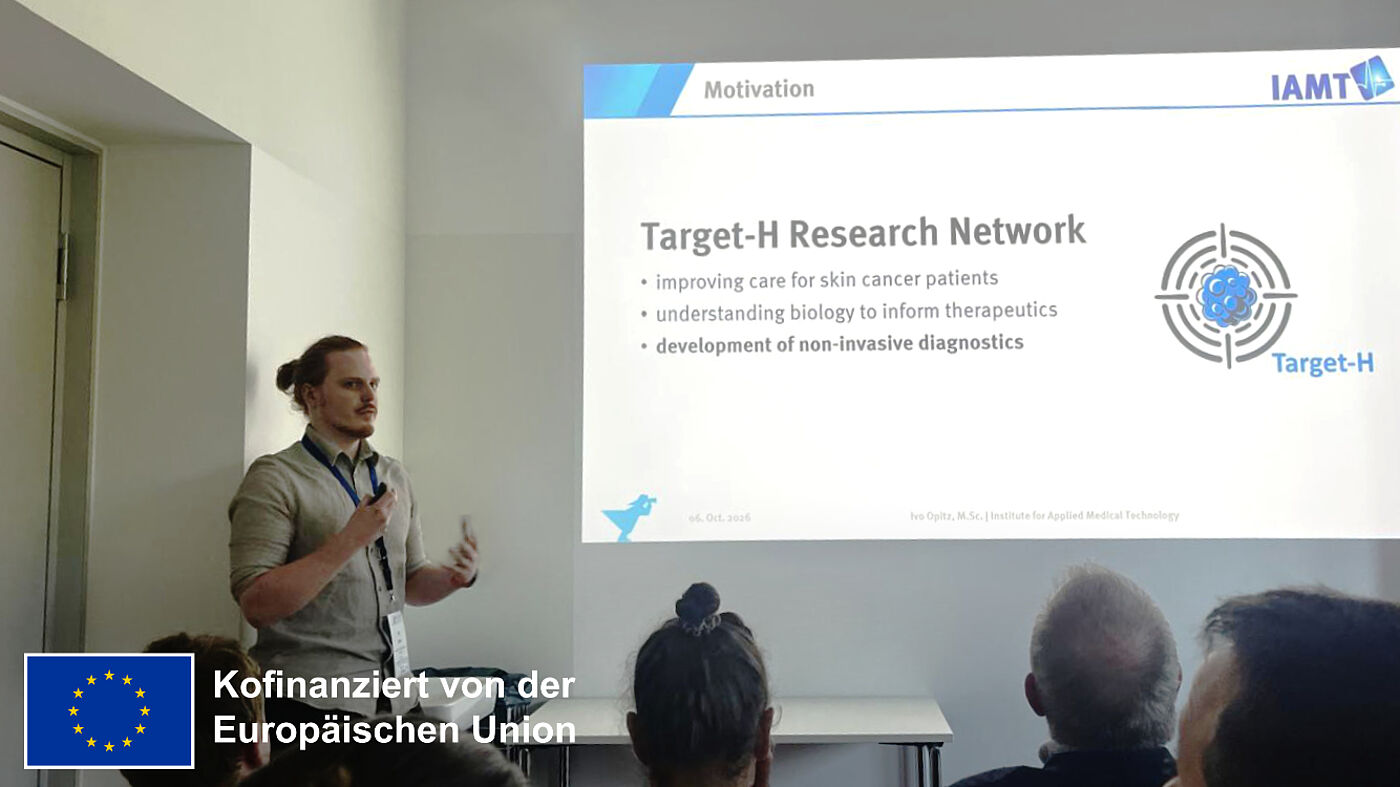
In addition, as part of the Target-H research project, Ivo Opitz gave a presentation on his paper, which examines the influence of melanin on the analysis of hyperspectral images. Under the supervision of Prof. Christoph Hornberger, the PhD candidate is researching methods for skin cancer diagnosis using hyperspectral imaging, a technique directly influenced by melanin. Based on the findings, the team hopes that, following skin cancer screening, fewer benign skin lesions will need to be removed. The Target-H project is funded as part of the 2021–2027 ERDF programme of the state of Mecklenburg-Western Pomerania, with funding from the European Regional Development Fund of the European Union (EXF-25-1044).
In addition, the participants took part in expert committees on optical methods (BioScope) and automation technology (AUTOMED) to exchange views on research topics independently of specific research institutions or projects.
The travel time to the 61st Annual Conference of the German Society for Biomedical Engineering will be considerably shorter, as it is due to take place in Rostock in 2027.