
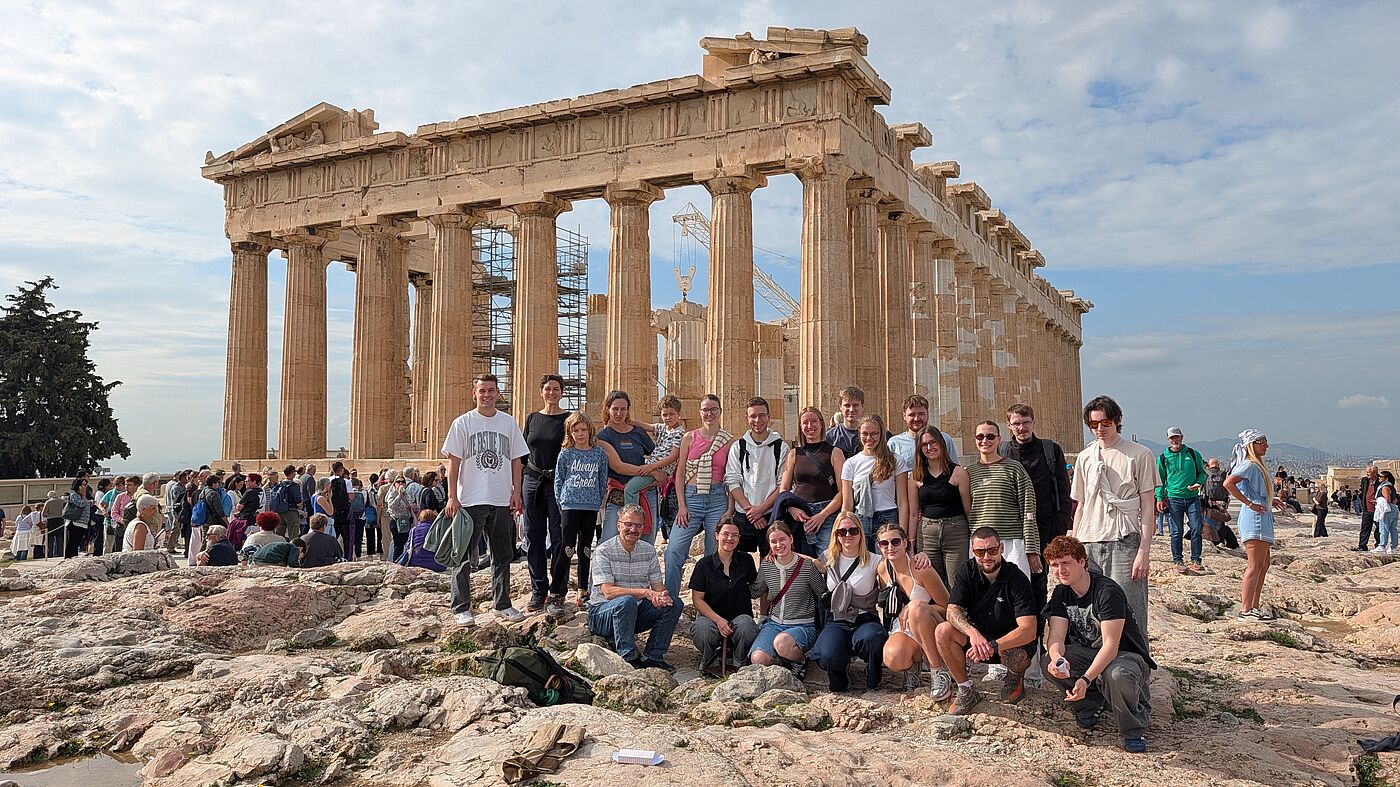
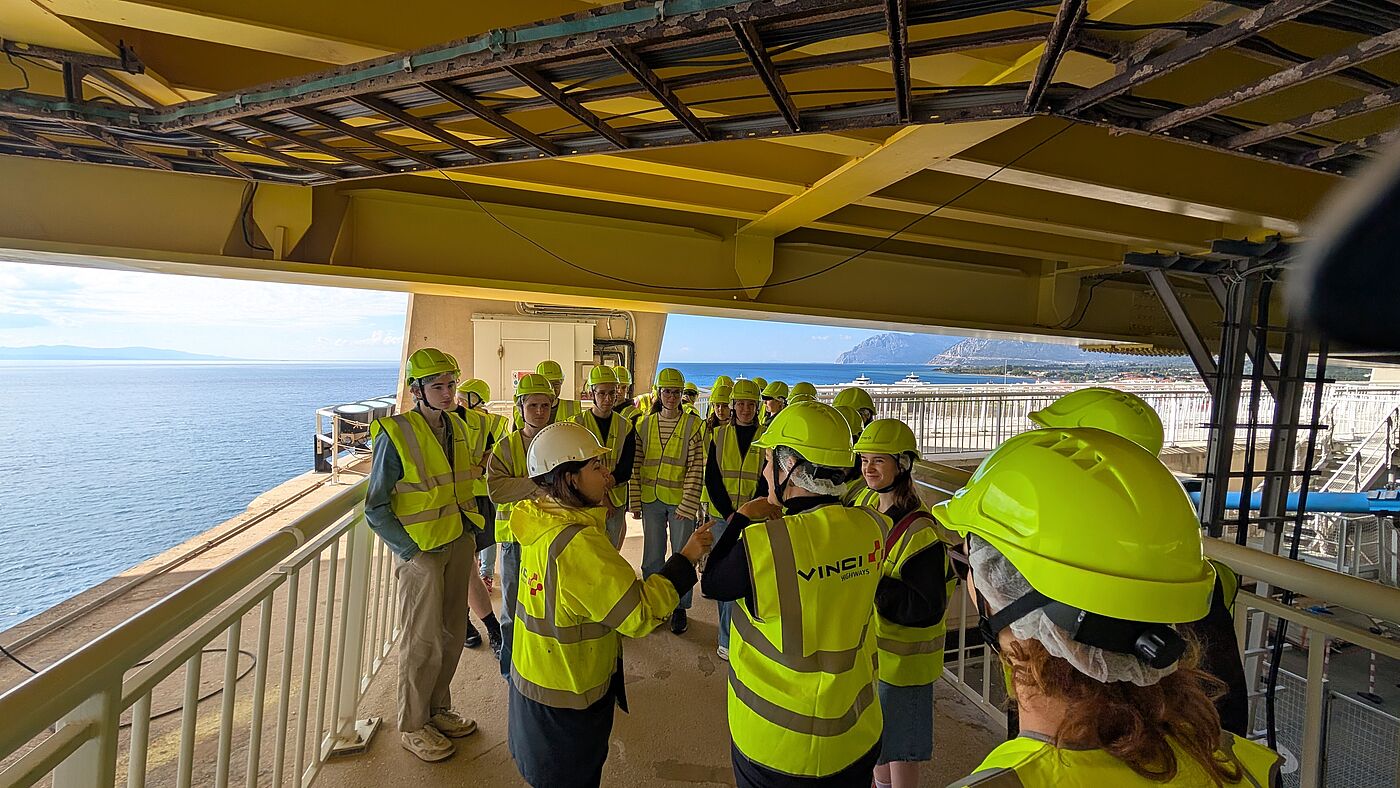
Led by Prof. Dipl.-Ing. Silke Flaßnöcker from the Faculty of Architecture and Design and Prof. Dr.-Ing. Kersten Latz from the Faculty of Engineering, this inter-faculty study trip was organised to foster closer collaboration between students from different disciplines.
The programme was correspondingly varied: alongside ancient religious sites such as the Acropolis and the Mycenaean archaeological sites in the Peloponnese, the itinerary also included the Rion–Antirion Bridge near Patras – Europe’s longest cable-stayed bridge, which was specifically designed to withstand extreme seismic activity.
Another highlight of the excursion was the National Archaeological Museum in Athens. Whilst there, Prof. Stavros Gyftopoulos from the National Technical University of Athens gave the participants an exclusive insight into the planned, extensive underground extension to the neoclassical building, designed by David Chipperfield, which is due to be completed in the coming years.
Alongside architectural and technical elements of the programme, the group also explored the country’s historical and social development. Whilst in the Peloponnese, for instance, the students examined the period of German occupation and were deeply moved during their visit to the memorial to the Kalavryta massacre.
It was an all-round successful trip that broadened the horizons of everyone involved and fostered dialogue between the faculties.